
Natural Skin Rejuvenation Guide
Does PRP Improve Skin Texture? Benefits, Results and Treatment Guide
Learn how platelet-rich plasma may support collagen production, smoother-looking skin and natural facial rejuvenation.
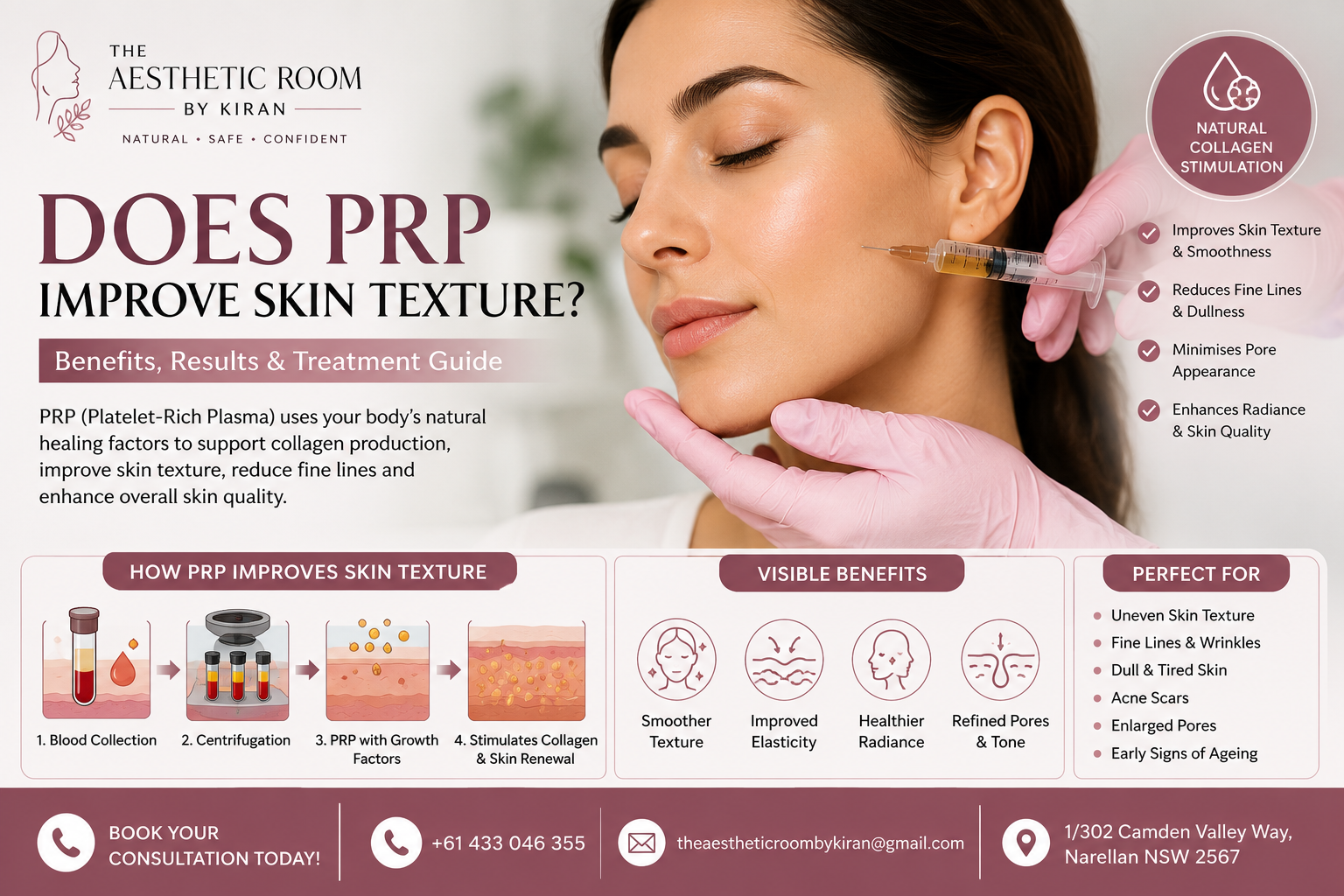
Does PRP improve skin texture? This is a common question among people looking for a natural, non-surgical way to refresh dull, uneven or ageing skin. Platelet-rich plasma, commonly called PRP, uses a concentrated portion of the patient's own blood and is applied or injected into selected treatment areas under professional care.
PRP contains platelets and naturally occurring growth factors involved in the body's normal healing processes. When used for cosmetic skin rejuvenation, the aim is to support collagen activity, skin repair and gradual improvement in overall skin quality. Some people notice smoother-looking skin, improved radiance and a softer appearance of fine lines after completing an appropriate treatment plan.
Results are not identical for everyone. Age, skin condition, lifestyle, treatment technique, number of sessions and aftercare can all influence the outcome. A professional consultation at The Aesthetic Room by Kiran can help determine whether PRP is suitable for your skin goals.
What Is PRP Skin Rejuvenation?
PRP skin rejuvenation begins with a small blood draw. The blood is placed in a centrifuge, which separates its components and produces a platelet-rich portion. The prepared PRP is then used in the treatment area according to the practitioner's recommended technique.
Because PRP is obtained from the patient's own blood, the treatment is often described as an autologous procedure. Its role in facial rejuvenation is to encourage the skin's natural renewal response rather than adding artificial volume.
People considering local treatment can read more about PRP treatment in Liverpool, Sydney and PRP treatment in Oran Park .
Does PRP Improve Skin Texture and Smoothness?
PRP may improve the appearance of skin texture by supporting collagen formation and tissue renewal. Collagen is an important structural protein that contributes to firmness, elasticity and a smoother skin surface.
Research into PRP facial rejuvenation has reported possible improvements in skin texture, pore appearance, fine lines and overall skin quality. However, treatment protocols vary, and results should not be guaranteed. PRP does not stop ageing or create the dramatic lifting effect of surgery.
The American Academy of Dermatology explains that some patients report visible improvement after PRP facial treatment, while also noting that more research is needed to understand its effectiveness fully. You can review its patient information about PRP and younger-looking skin .
PRP may help improve the appearance of:
- Rough or uneven-looking skin texture.
- Dullness and loss of natural radiance.
- Mild fine lines and early signs of ageing.
- The appearance of enlarged pores.
- Mild acne-related textural irregularities.
- Reduced firmness or elasticity.
PRP Combined With Microneedling
PRP is sometimes combined with microneedling to support skin rejuvenation. Microneedling creates controlled microchannels in the skin, while PRP is used as part of the treatment protocol. The combined approach may support collagen production and improve the appearance of uneven texture or mild acne scarring.
People exploring this combination can learn more about microneedling in Camden or review our guide to skin needling and microneedling in Liverpool .
The most appropriate treatment depends on your skin type, sensitivity, concerns and medical history. Combining treatments should only occur after an individual assessment by a qualified practitioner.
When Will You Notice PRP Skin Results?
PRP results are generally gradual because the treatment is intended to support the body's natural regenerative processes. Temporary redness, sensitivity, mild swelling or small marks may occur immediately after treatment.
Some people begin noticing fresher-looking skin within several weeks, while improvements related to collagen remodelling may continue to develop over the following months. A series of treatments may be recommended depending on the condition of the skin and the desired outcome.
PRP is not an instant makeover. Realistic expectations, appropriate treatment intervals and careful aftercare are important parts of the process.
Which Areas Can Be Treated?
PRP skin rejuvenation is commonly considered for the face, although suitability depends on the individual. Treatment may focus on the cheeks, forehead, jawline or areas with visible textural changes.
The delicate under-eye area may require a different approach. PRF is another autologous treatment option that may be considered for selected patients. Read more about PRF under-eye rejuvenation in Liverpool .
Patients near Gregory Hills can also explore information about PRP skin treatment in Gregory Hills .
PRP Skin Treatment Aftercare
Your practitioner should provide aftercare instructions based on how the PRP was applied and whether it was combined with microneedling. Following those directions can help protect the treated area while it settles.
General aftercare may include:
- Avoid touching or rubbing the treated area unnecessarily.
- Use only practitioner-approved skincare products.
- Avoid strong acids, retinoids and exfoliants until advised.
- Avoid excessive heat, saunas and strenuous exercise for the recommended period.
- Protect the skin from direct sun exposure.
- Contact the clinic if you experience unexpected or worsening symptoms.
Aftercare instructions may differ between PRP skin rejuvenation and PRP hair restoration. Always follow the specific advice given for your procedure.
PRP for Skin Versus PRP for Hair
PRP may be used in different aesthetic contexts, but skin and scalp treatments have different goals. Facial PRP is generally intended to support skin quality and rejuvenation, while scalp PRP is used in selected hair-loss treatment plans.
For information about scalp treatments, visit our guides to PRP hair restoration in Liverpool , PRP hair restoration in Leppington and PRP hair restoration in Harrington Grove .
Frequently Asked Questions
Does PRP improve skin texture?
PRP may support gradual improvement in skin texture by encouraging natural repair and collagen activity. Results vary, and an individual assessment is needed to determine suitability.
Can PRP make my skin look smoother?
Some patients notice smoother, fresher-looking skin after treatment. The degree of improvement depends on skin condition, age, treatment method and the number of sessions completed.
Can PRP reduce acne scars?
PRP may be used alongside treatments such as microneedling to improve the appearance of selected acne scars. Deep or complex scars may require a different or combined treatment plan.
How many PRP sessions are needed for skin texture?
The number of sessions varies according to the patient's skin, goals and response to treatment. A practitioner may recommend a planned series followed by maintenance when appropriate.
How long do PRP facial results last?
Results differ between patients and are influenced by ageing, sun exposure, skincare, smoking, general health and maintenance treatments. PRP cannot permanently stop natural skin ageing.
Is PRP better than microneedling?
They are different treatments and may sometimes be combined. The better option depends on your skin concerns, tolerance, medical history and treatment goals.
Is there downtime after a PRP facial?
Temporary redness, mild swelling, tenderness or small marks may occur. Downtime depends on whether PRP is injected, applied after microneedling or used through another technique.
Who should avoid PRP skin treatment?
PRP may not be appropriate for everyone. People with certain blood disorders, active infections, significant medical conditions or particular medications may need to avoid or postpone treatment. Full medical screening is essential.
What should I avoid after PRP hair treatment?
After scalp PRP, patients are commonly advised to avoid rubbing the scalp, strenuous exercise, excessive heat, harsh hair products and colouring for the period specified by their practitioner. Instructions vary, so follow the personalised aftercare provided by your clinic.
Why Choose The Aesthetic Room by Kiran?
The Aesthetic Room by Kiran provides personalised skin and hair rejuvenation treatments in Narellan, NSW. Consultations are designed to assess your concerns, medical history, expectations and suitability before a treatment plan is recommended.
- Care provided by a Registered Nurse.
- Personalised treatment planning.
- Natural-looking rejuvenation goals.
- Clear pre-treatment and aftercare guidance.
- Convenient care for Narellan and South West Sydney communities.
Conclusion
So, does PRP improve skin texture? PRP may help selected patients achieve smoother-looking, fresher and more even skin by supporting natural repair and collagen activity. However, results vary, improvement develops gradually and no cosmetic procedure can guarantee a specific outcome.
The safest way to decide whether PRP is right for you is to arrange a professional consultation. Your skin condition, medical history and expectations can then be reviewed before a personalised plan is recommended.